How to make your monthly revenue in a day → Product Drops guide
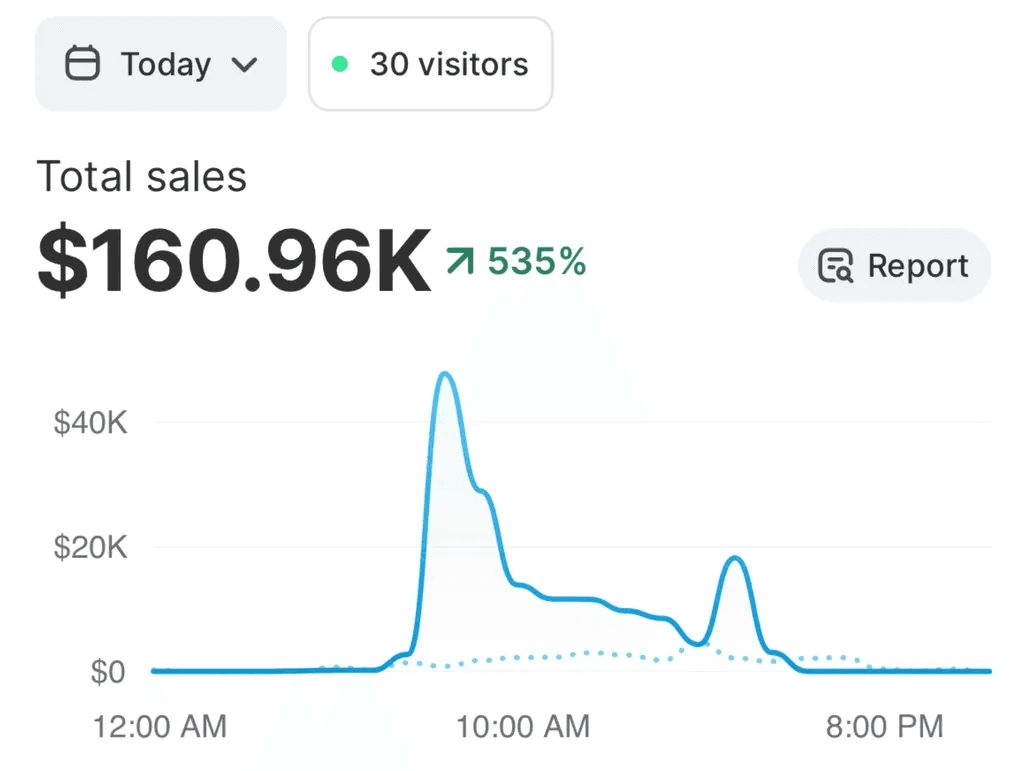
We have 3x’d the revenue for a good few of our clients just from introducing weekly/monthly product drops.
In this guide I’ll teach you how you can implement it into your brand to achieve the same
If you want us to set this up for you, book a call with me, and I’ll show you how we can take your brand to the next level → https://calendly.com/nestemailmarketing/arsc
Let’s dive deep into the strategies and steps involved:
Understanding Product Drops
What Are Product Drops?
Product drops are a marketing strategy where a limited quantity of new products are released at specific times
This creates urgency and excitement as there’s a limited quantity, leading to increased sales and brand engagement
Why use Product Drops?
Increased Revenue: Drops create a sense of urgency, leading to faster sales
Customer Engagement: Keeps your audience engaged and coming back for more
Brand Loyalty: Builds a community of loyal customers eager for exclusive products
Scalability: Can be scaled from small, frequent drops to larger, more significant releases
We’ve seen many brands achieve their average monthly revenue in a day with product drops, so it’s clear that they work
Types of stores and their drop strategies
Evergreen stores
These stores sell a variety of products and are open year-round. Examples include major retailers like Target, Walmart, and Amazon. For these stores, the strategy involves:
Labeling New Products as ‘Sold Out’: Create anticipation by showcasing upcoming products as ‘sold out’ before the actual release.
Email Opt-In Forms: Use ‘back in stock’ forms to collect emails from interested customers. This builds a targeted email list for future marketing.
Example:
Target might introduce a new limited-edition kitchen appliance, label it as ‘sold out,’ and collect emails from customers interested in purchasing it once available
Drop-only stores
These stores operate on a drop-only basis, releasing products periodically. Examples include streetwear brands like Supreme and sneaker brands like Yeezy
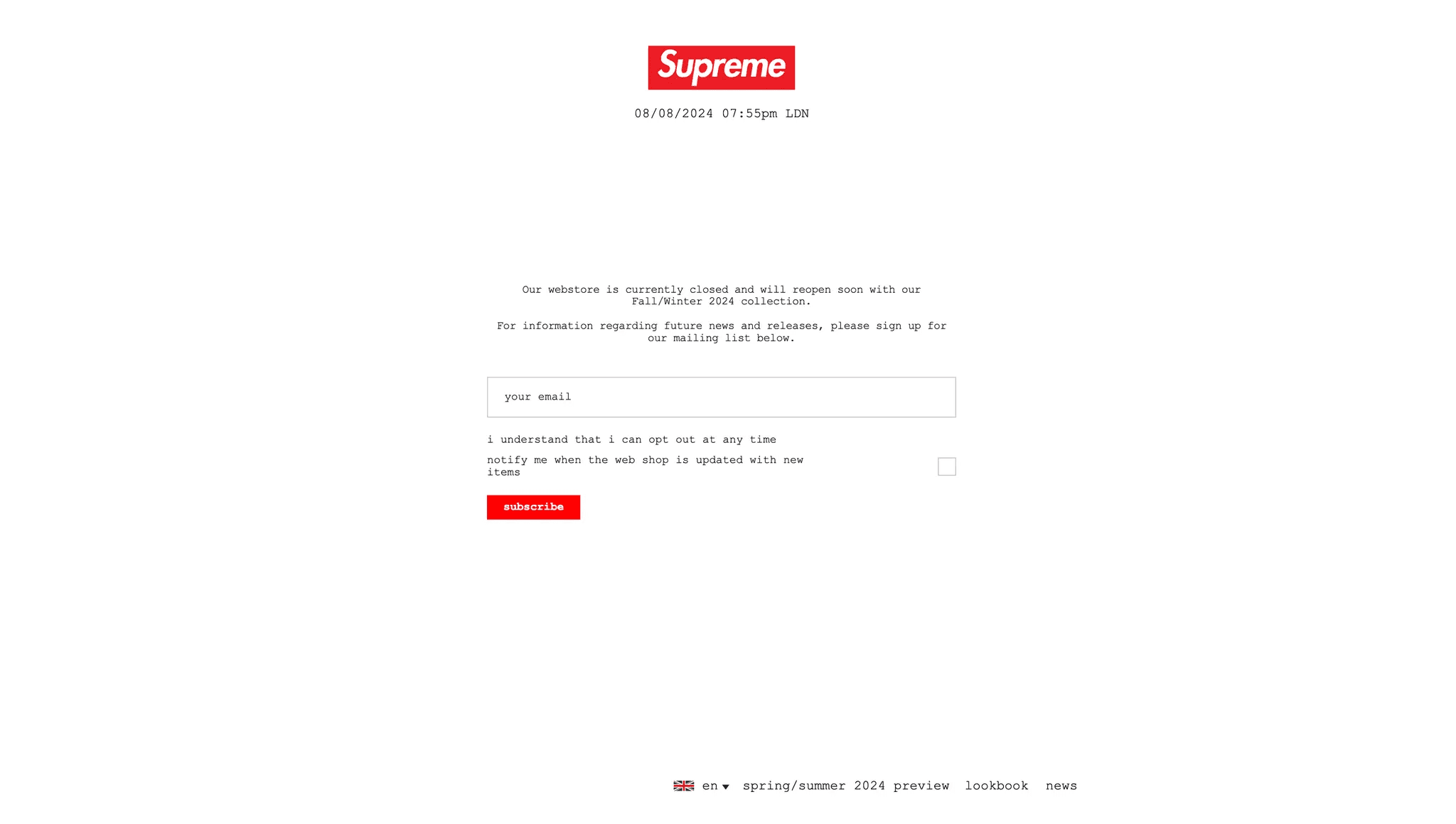
Closed Site with Email Form: When no drop is live, the site should have an email sign-up form and a countdown timer.
Hype on Social Media: Use platforms like Instagram and Twitter to build anticipation for the next drop.
Example:
Supreme often closes its site between drops, driving traffic to a sign-up form where fans can register for updates and exclusive early access.
Building hype
Collecting Emails
Hype is built both on social media and through email marketing campaigns. Here’s how:
Social Media Push: Direct traffic from your social media platforms to your website to collect emails. Collaborate with influencers who align with your brand for wider reach.
Simple Opt-In Forms: Don’t overcomplicate your opt-in form. A simple form inviting visitors to join a VIP list can be highly effective. For instance, a simple embedded form helped us collect 41k emails in three days for a client with 2 million followers.
Example:
A beauty brand could use Instagram stories and posts to direct followers to their website’s opt-in form, offering early access to a new makeup line.
VIP Lists
Invite customers to join your VIP list for early access to new drops. This makes them feel special and increases the likelihood of conversions.
Example: A fitness apparel brand could promote their VIP list, offering members first dibs on a new collection of workout gear.
Segmenting Emails
Two Main Segments
Internal Traffic: Past buyers or current mailing list subscribers.
Cold Traffic: First-time visitors from ads or social media campaigns.
VIP vs. Non-VIP
VIP: Those who have opened an email in the last 30 days or just signed up for the drop.
Non-VIP: Other subscribers.
Example: An electronics brand could segment their list to target VIPs with exclusive early access to a new gadget, while non-VIPs receive general promotional content.
Setting dates
Once you have identified your VIP customers, publicly announce two key dates on social media:
Early Access Release: For VIP customers.
Public Launch: For everyone else.
Preparing for Early Access
Promotion Timeline
Start promoting the early access drop 5 days in advance. Use the following schedule for emails:
5 Days Before: Announce the upcoming early access.
72 Hours Before: Reminder with a teaser of the product.
48 Hours Before: Emphasize limited quantity and exclusivity.
24 Hours Before: Final reminder.
1 Hour Before: Last chance alert.
At the Drop: Announce that early access is live.
For SMS:
3 Hours Left: Reminder.
At the Drop: Alert that early access is live.
Email and SMS Content
Keep emails and SMS content simple and focused on building hype, scarcity, and urgency. Here’s an example of a release email:
Subject: Exclusive Early Access: New Serum Drop
Body: “Hey [Name], The moment you’ve been waiting for is here! Our new serum is now available exclusively for our VIP members. Don’t miss out on this limited release. Shop Now [Link]
Hurry, quantities are limited! Best, [Brand Name]”
Post early access release
Follow-Up
Once early access has been live for a few hours, close it. Send a follow-up email to your entire list:
Subject: Thank You for an Amazing Early Access!
Body: “Hey [Name], Thank you to everyone who participated in our early access event! We are thrilled with the response and look forward to our next drop. Stay tuned for more exciting releases. Best, [Brand Name]”
Share this message on social media to create FOMO and make buyers feel part of an exclusive club.
Launch day
Public Launch Strategy
A few days after early access, launch the product to the public. Use social media and emails to build hype again, though with fewer emails than for early access.
Here’s the timeline:
5 Days Before: Announce the public launch.
72 Hours Before: Reminder with product highlights.
48 Hours Before: Emphasize benefits and features.
24 Hours Before: Final reminder.
1 Hour Before: Last chance alert.
At the Drop: Announce that the product is live.
Example: A home decor brand could use this timeline to promote the public launch of a new furniture collection, highlighting its unique features and benefits.
Running Ads
Once the product is launched, start running ads to promote it. Use social media, Google Ads, and other platforms to reach a wider audience.
Real world examples
Fashion Brand: Gymshark
Gymshark frequently uses product drops to generate excitement and drive sales. They announce drops on social media, build hype through influencers, and use email marketing to keep their audience engaged.
Beauty Brand: Glossier
Glossier uses product drops to introduce new and limited edition products. They create anticipation through social media teasers, email campaigns, and VIP access for loyal customers.
Tech Brand: Apple
Apple is known for its highly anticipated product launches. They build hype through announcements, pre-orders, and exclusive early access for select customers.
You can also look at SNKRS by Nike, The Vault by RepresentClo and even the Travis Scott burger that McDonald’s did as good examples of product drops
If you need help setting this up for your brand, book a call with us, and we’ll guide you through the process → Book a call